About Me

1
Hwæt.
So. I grew up in Belfast during The troubles and came of age during the peace process. Early memories include controlled and uncontrolled explosions; learning that my primary school had been burned down in a sectarian attack; at 7, the attempted murder of a classmate’s father (a Catholic taxi, driver lured to a loyalist area and shot); the actual murder of a different classmate’s brother a few years later (targeted for wearing a football jersey); and many incidents where I was attacked physically or verbally owing to my name or background.
As surprising as it sounds, such experiences were normal for young people in Northern Ireland, whether they were coded green or orange. The troubles were always present, often terrifying, but never defining. I didn’t know anyone who thought their story made them a victim in any sense that mattered, much less more worthy than anyone else. Instead the overwhelming feeling was of one grim optimism – change is coming, so we will endure the present evils.
Living in such a divided society was a great inoculation against political tribalism – the moment the troubles were ’over’, it was obvious to everyone how senseless and futile it all had been. Unfortunately this sentiment seems to be fading, including amongst a younger generation who have only known peace. Today’s popular narrative seems to elevate bigots and gunmen far above the flawed moderates who delivered the Good Friday Agreement.
So hope for a great sea-change
On the far side of revenge
Believe that a further shore
Is reachable from here
What’s the hottest planet?
I’ve always had a curious personality and like to ask a lot of questions. As a child science was my main outlet, and I read incessantly about animals, volcanos, and space. Once, when doing a practice exam for the 11+, I lost a mark on a question about the temperature of the planets. I had identified Venus as the hottest planet, even though Mercury is closer to the Sun. I knew all about Venus’ thick atmosphere and greenhouse effect from my books, and was outraged when my teachers wouldn’t back down. Incensed, I demanded that my mother call the Armagh Planetarium to settle the matter. A bewildered astrophysicist duly weighed-in and confirmed I was right, but I never got the mark back. Fortunately, being from Northern Ireland, I was used to injustice.
2
Medicine, Molecules & Other Mysteries
After more schooling, an awkward teenage phase, and short interludes as a civil servant, physics technician, and care assistant, I started medical school. The initial years of training are dedicated to basic science, anatomy, and physiology, which suited me, since I loved science, and liked thinking from the ground up.
In these early years I became mesmerised by molecular biology and how it would shape the future of medicine. I wanted to learn everything I could about how antibodies work, how cells guard against mutations, and why DNA is expressed so differently from one tissue to the next. Before I knew it, I had fallen down an amazing rabbit hole of enzymes, embryology and evolution.
One of the most interesting challenges in biology was the ‘protein folding problem’. Proteins are long chains of amino acids encoded by a corresponding gene. As they are synthesised, the chain twists and folds in on itself to form a complex ‘tertiary’ structure. Very simply: if you know a protein’s structure, then you can understand how it functions, its role in disease, and whether or not a drug will bind to it.
The problem was that predicting exactly how a protein will fold is almost impossible. Some researchers were using computer models as an alternative to painstaking lab experimentation, but with big limitations (c. 2010). To my very simple way of thinking, their problem was a lack of ambition – software could brute force this problem, we just needed to build a bigger computer.
I decided to pause my clinical studies to intercalate in molecular biology, telling my supervisor that I’d like to build a ‘super duper’ computer (a mere ‘super’ computer wasn’t enough). Once it had determined the structure of every protein, I explained how we could use it to design precision drugs and then treat any disease. Simple! 1
He told me (kindly) that I was naive, and to focus my efforts on the syllabus and the lab project I’d been assigned: synthesising just one protein, and measuring its kinetics.
I spent a lot of time in a lab and in lectures and did mostly what I was told. I still wanted to work on protein folding, so I taught myself the rudiments of Python and JavaScript and did basic computer modelling of my target protein on the side.
A year later, I had not solved the protein folding problem (quelle surprise!) 2 . But I had gained an extra degree, more perspective, and some programming skills that would prove useful later.
Back in clinical training, I spent far less time on science and far more on the practical skills of being a doctor: history, examination, diagnosis, treatment. This meant learning how to wield a stethoscope, where to put a catheter, and how to test (most of) the cranial nerves.
Exposure to frontline medicine began to kindle a new interest – the workings of the health system itself. I was curious: Why the separation between primary and secondary care? What’s up with ward rounds? Why on earth do we make orthopaedic surgeons look after patients outside of the operating theatre? And why do psychiatrists act like they’ve never been to medical school?
I had thought that medicine was supposed to be scientific and rational, but as I got closer to practice, the profession’s strange rules and rituals felt as convoluted as a folding protein.
3
NHS, Programming & Politics (2012-17)
I moved to London full of pride as I started my medical career. But my enthusiasm was soon tempered by my despair for the operational mechanics of the NHS.
Friction seemed universal. Computer systems didn’t speak to one another, getting an emergency neurosurgical opinion required a fax machine, and the various medical specialties seemed locked in a permanent turf war.
It all came home to me as I explained the process of booking an MRI to a new doctor: “First, complete a digital request on the computer, then print it, walk to the radiology department, read it aloud to a consultant (if you can find one), get their signature, and personally deliver the signed copy to the scanner room…”
Every nurse, doctor, physio, and pharmacist I met could reel off a dozen painful examples, yet managers seemed to have a different outlook. “Yes, we know about [problem] , but don’t worry [Staff Member X] is running a ‘Quality Improvement Project’” – Always with a capital Q, I, and P.
What were these QIPs? I desperately wanted to contribute since so many of our problems seemed to relate to technology. I pestered my superiors and was eventually allowed to attend official leadership training. I was duly indoctrinated into the NHS’s ‘theory of change’ and sanctioned improvement frameworks like PDCA (‘Plan, Do, Check, Act’). Freshly equipped with the right tools and jargon, I set about putting theory into practice: analysing problems, writing business cases, building coalitions – and uniquely, developing software.
Juggling my clinical responsibilities, I got involved wherever I could. I built apps to help doctors find phone numbers and clinical guidelines, and replaced Excel spreadsheets with databases. Writing code wasn’t just useful for building; it also let me extract and analyse data in ways others couldn’t. In one job I managed to get hold of a complex patient dataset and show how a new method of triage could reduce duration of stay in the emergency department.
I had fun building and always took care to wrap these projects in the approved methods and language of the institution. But although I had a few notable successes as ‘NHS innovator’, I endured many more failures. The challenge was politics. No matter how powerful the champions or how strong the business case, initiatives would die if just one person objected.
Sometimes I ran afoul of existing QIPs that had ‘no room’ for new collaborators. The guidelines app I mentioned was used daily by 90% of A&E staff, but was permanently blocked by the IT department after a spurious complaint from a non-clinical administrator. Despite pleas from senior clinical leaders, access was never restored, and no alternative was countenanced.
Perhaps the lowest ebb came after my novel analysis of triage data. When I showed my findings and recommendations, the presentation was met with applause – literally. Yet the next day I received an email from a senior clinician who had not been present. They stated that I had acted unprofessionally and beyond my scope, and threatened to report me to the deanery. Astonished, I sought support from leaders who had clapped – privately, they agreed I had done nothing wrong, but wouldn’t contradict their colleague. To avoid censure, they urged me to apologise. I did not 3 , and the changes were never implemented.
I had once imagined a career split between clinical practice and biomedical research. But after 5 years in the health service, a different divide was emerging – between my passion for technology and medicine itself. I loved working with patients, but felt my ambitions as a technologist were being limited by the NHS. So, having failed to change the system from the inside, I decided to try from the outside.
4
Elephant
I co-founded Elephant in late 2017 with another atypical doctor: a psychiatrist with a deep commercial streak and potent powers of persuasion. Brought together by our mutual frustration with the NHS, we imagined building a new healthcare system on digital foundations. It was a classic combination of startup utopianism and megalomania.
We started the company with a manifesto and prototype. The premise of the demo was simple: scan a QR code to access your medical record, hosted not on a hospital’s server, but on a swarm of ultra-secure peer-to-peer nodes. This was the era of blockchain and bitcoin hype, and I built the prototype using the ‘Inter-Planetary File System’ and experimental in-browser cryptography. It was quite possibly the world’s first ‘decentralised’ medical record 4 , and VCs were persuaded to give us a shot.
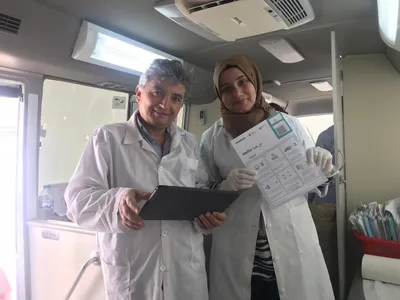
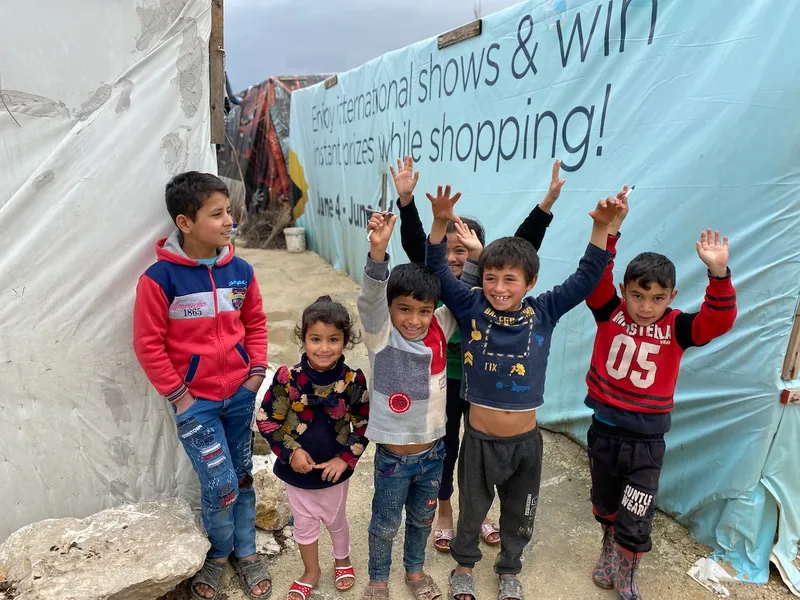
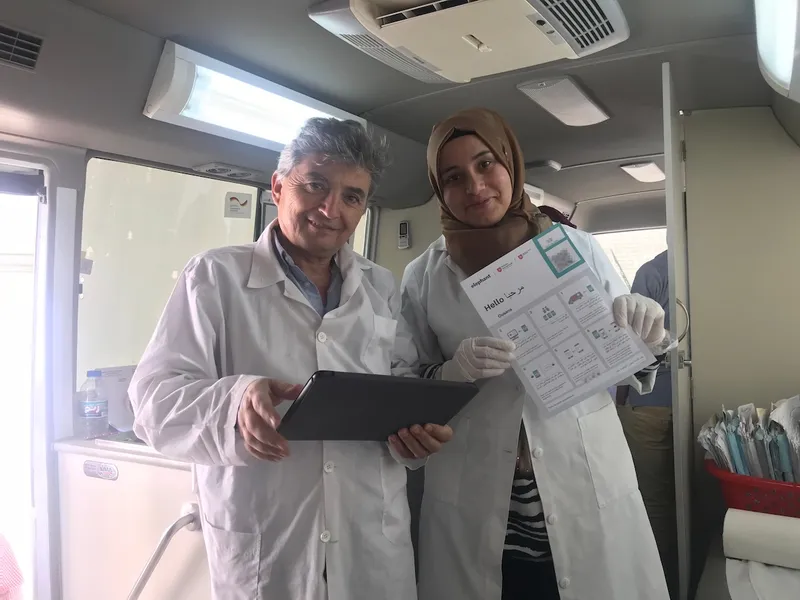
It felt impossible to rebuild healthcare in the UK, so we looked to developing economies for a digital greenfield. Our network led us to Lebanon, where we partnered with an NGO delivering primary healthcare to Syrian refugees from a bus.

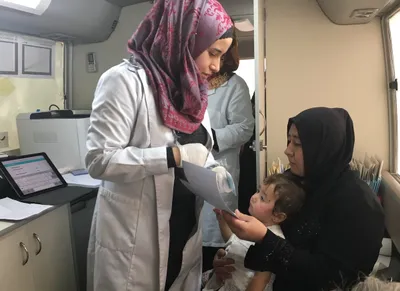
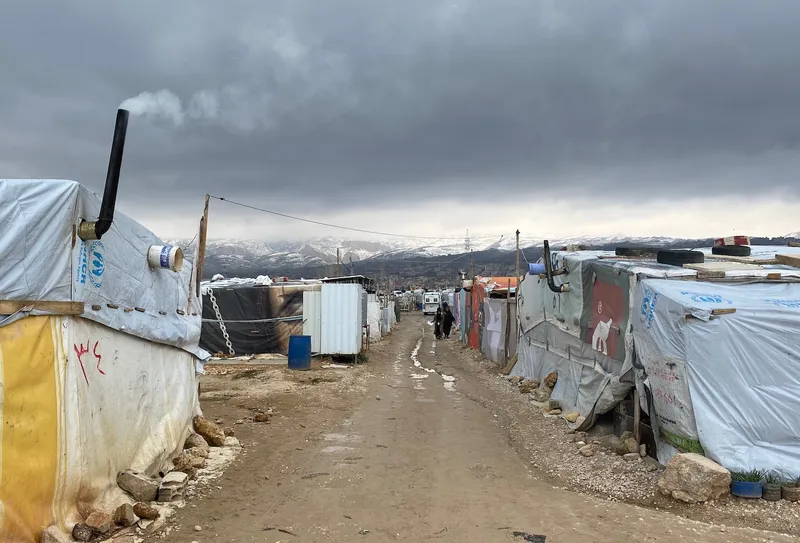
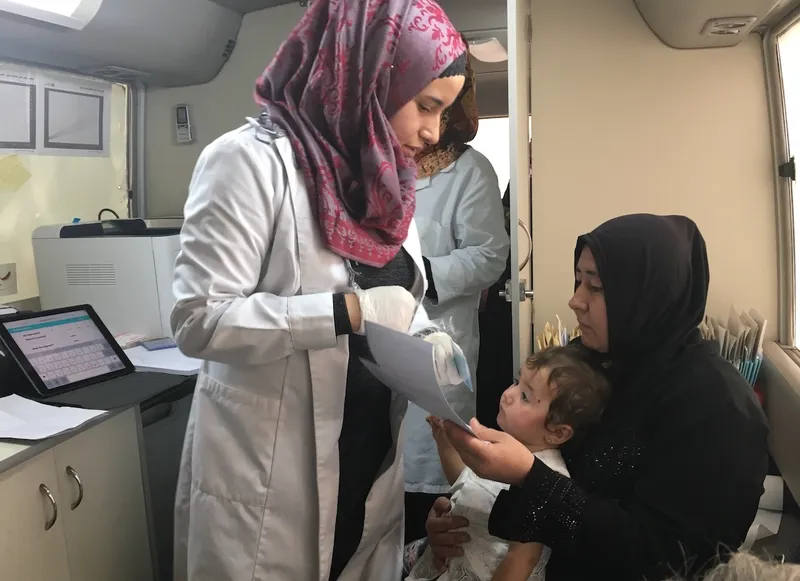
Given our experiences in the NHS, we had conviction that for any clinical tool to be adopted, it must be “faster than pen and paper”. This became an internal design principle and played a major role in Elephant’s success. Within a week of our first launch, the mobile clinic was running so much faster that it could see every patient and close an hour earlier each day. Meanwhile, the NGO funding the project was getting accurate data for the first time, transforming their understanding of refugee need, clinic activity and impact.
Our vision was to create a universal platform that connected medical care, diagnostics, pharmacy management, payments, and public health analytics. As we grew to new territories, it was hugely satisfying to see how technology could have an impact on both a personal and system level. In clinics, Elephant would cut waiting times, reduce drug waste, and replace slow analog reporting with real-time data. For families, Elephant made it possible to ‘carry’ their medical history from a village clinic to a regional hospital – vastly improving the quality and safety of their care.
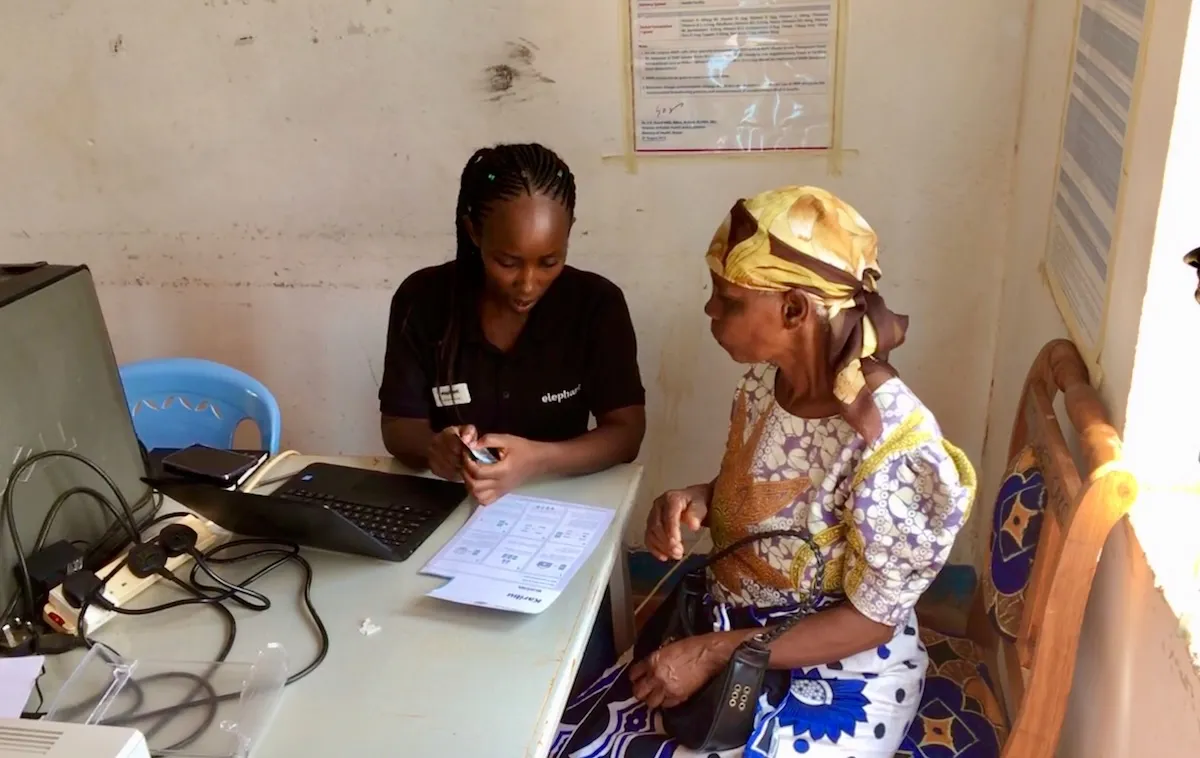
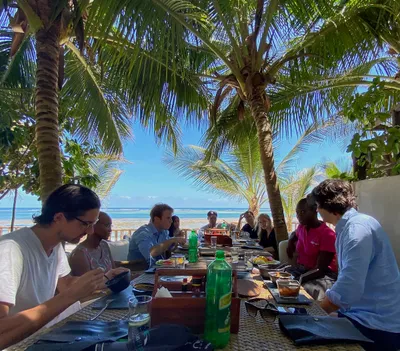
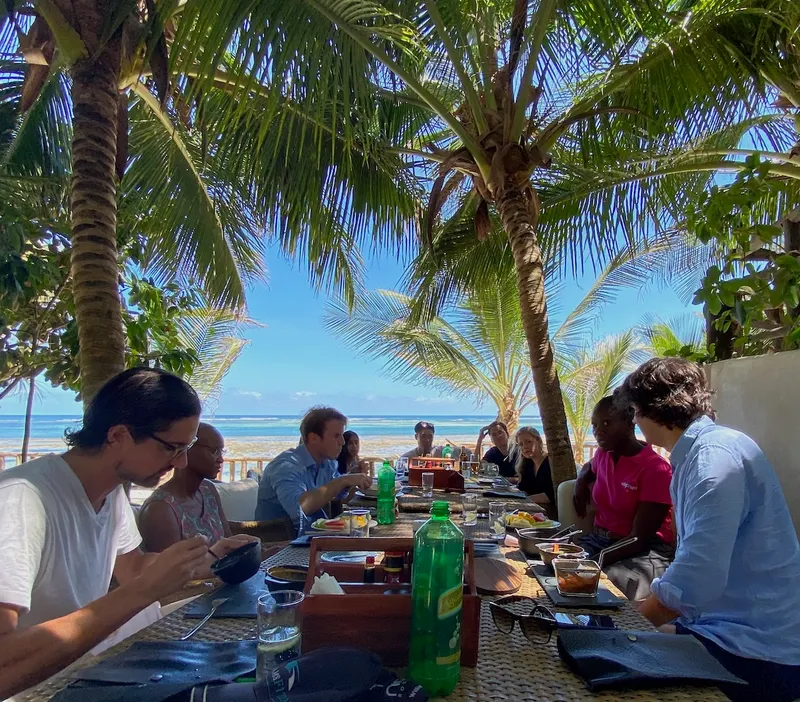
Elephant in Kenya
Through these years as a founder I was privileged to work on all sorts of interesting product, technology, and healthcare problems. Everything from dealing with politicians, managing server infrastructure across multiple clouds, creating products for different literacy levels, and wrangling huge health datasets. Above all, I felt proud to have helped assemble an amazing team.
By the time I left Elephant in 2022, the company had weathered numerous crises, secured multiple rounds of funding, launched in 5 countries, supported governments through COVID-19, hired more than 120 people, and given millions of patients access to their medical records. This was impact on a scale far greater than I could have achieved as a lone physician.
5
Startups, Craft & The Present.
I had assumed that my clinical experience would help me develop great medical products, but I honestly hadn’t thought much about what building a company actually involved. One moment I was a doctor, with stable employment and prospects, the next I was ‘entrepreneur’, responsible for investors, payroll, taxes, contracts, marketing, hiring people, firing people, and a hundred other things I had no experience with whatsoever.
I knew I had grit having survived med school and years in emergency medicine, but startups are unique for the sheer volume and variety of problems you need to face down. It takes a different kind of resilience.
“Bear up old heart! You’ve borne worse, far worse
In time I would come to understand that building a business, like medicine, is a craft. The problems don’t go away, but you learn to stay calm, focus on what matters, and find a path forward. Once this had dawned on me, it turned out that medical training was a great base for many startup problems – prioritisation (triage!), navigating risk, managing people, and having difficult conversations. I’ve written about some of this in my manager readme.
Since leaving my own startup, I’ve been able to bring many of these skills to other companies, sometimes as a hands-on executive, other times as advisor or mentor. At one AI company, I helped a team reset after the organisation restructured. In just a few weeks a disparate group of data scientists and software engineers became a fully-fledged product-engineering team. Together we solved the most pressing challenge for the company, rewriting the entire codebase and AI pipeline for new customers. The data scientists absorbed a host of new skills from their software engineering colleagues, while the engineers gained hands-on knowledge about AI models and practical data science. It was transformative!
At KareHero I’ve helped build and lead a team that’s taken an idea from zero to one – using AI to help thousands of families navigate the chaos of care. We’ve scaled to more than 20 enterprises and along the way overcome all sorts of interesting problems, from data security and regulation, to ensuring our LLM doesn’t hallucinate social care rules.
In these roles I’ve had the benefit of experience and often the most valuable thing I can bring is perspective. Helping others find a moment of peace and see their present circumstances with composure and clarity. One of the most important lessons you learn in medicine and business, is that only a small number of things really matter, and our job is to focus on them.
If “focus” is the first lesson of working in a startup, the second is to build a team. You need people who know the things you don’t, whether it’s taxes, contracts, or a programming language. But the magic happens when you become more than just a collection of people with skills. Great teammates elevate each other, and great teams can change the world.
6
Fun (Coda)
When I meet new people I give them the short version of this autobiography. I tell them that I’m a doctor, engineer, and entrepreneur. And then I try to compress my ambitions and values into a single sentence, explaining how I’m “passionate about tackling huge problems with science, technology, and people.”
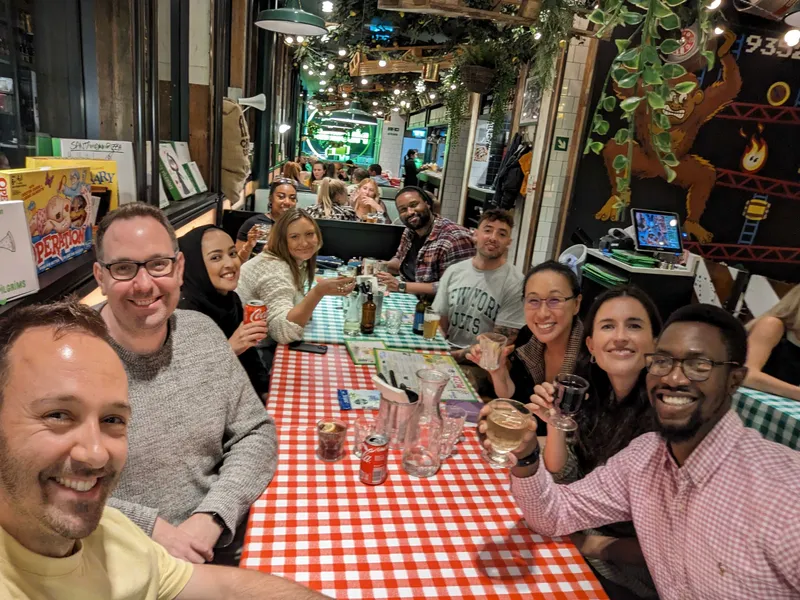
This seems to work pretty well, it covers the right professional bases and has the advantage of sincerity. But it does leave out one very important thing – fun. I’ve lived through plenty of ups and downs, periods of relentless work, sacrifice, and stress. But through it all I’ve kept my grim optimism and learned to take fun seriously.
Whatever you’re doing, don’t forget to enjoy it!

- Flights like this echo many startup pitches I’ve heard (and given!)↩︎
- In no sense did I come close to ‘solving’ the protein folding problem, I barely understood the concept of NP-hard problems, let alone anticipate the Nobel prize winning approach of AlphaFold!↩︎
- In truth, I went as far as drafting a resignation letter↩︎
- We quickly moved away from blockchain, not because the crypto bubble had burst (far from it!), but because we were pragmatic about the technology’s practical limitations.↩︎